The Resurgence of the Commons: Why Now
The old order is waning.
Something deep is shifting in the world. The global system that organized the last few centuries is buckling, and its established order of who wins and who loses, who extracts and who is extracted from is being re-negotiated in real time. Europe and the West, long accustomed to sitting near the top of that order, are at risk of sliding down it. And with every lurch, the system manufactures more of what Adam Arvidsson calls the outcasts of capitalism proper: people for whom the deal on offer no longer adds up, nominally inside the economy yet increasingly abandoned by it.
Beneath all of it runs a harder limit still — the end of abundant nature to exploit.
The extractivist way of life, the arrangement that assumed forests and rivers and climate would keep absorbing the abuse we threw at them forever, is running out of road. That bill is finally coming due.
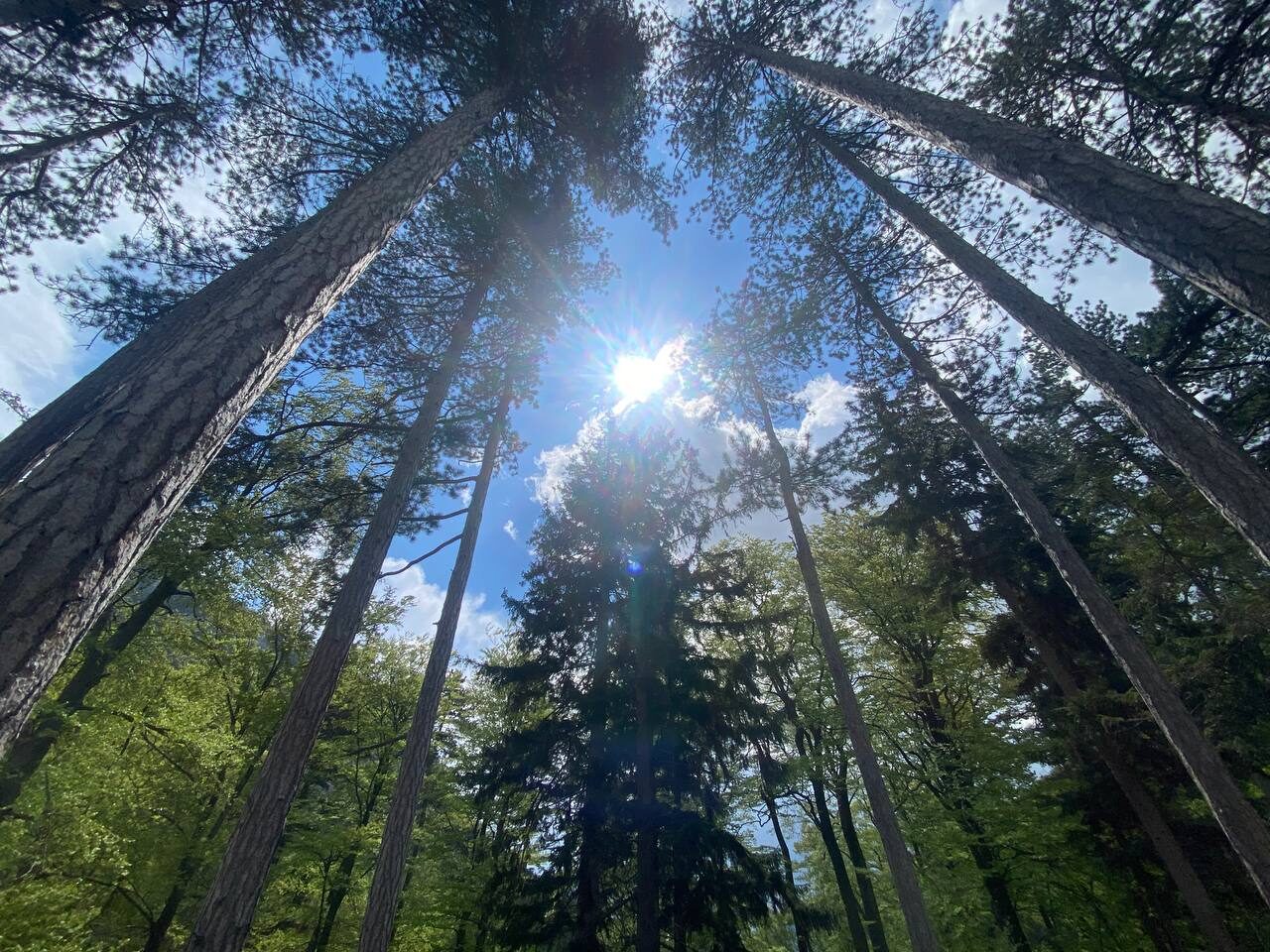
The same moment hands us new tools
But the same moment that is dismantling the old order is quietly handing us the tools to build a different one. With new technologies available to us, we can now do open value accounting across a whole network without a bank sitting in the middle; we can share designs globally and manufacture them locally, producing in a distributed way the old factory age would have thought impossible. And the protocols that coordinate the making of things can just as well coordinate the governing of them, letting communities steward shared resources without a boss or a state holding the only relevant ledger. Now, with AI folded in, even prototyping these tools collapses from months into days.
Taken together, these are cosmo-local technologies — a coming shift from peer-to-peer (P2P) to peer-for-peer (P4P): not just coordinating as equals but producing and providing for one another — a generative economy growing inside the husk of the extractive one.
In times of change, the Commons reign supreme
That is Bauwens' claim, and history keeps proving it: when the dominant institutions falter, people fall back on what they can hold and tend together; when they fail outright, alternative institutions may carry the knowledge across the gap.
Bauwens and Vitalik Buterin have, from very different directions, reached for the same old image — the monastery. In the long unraveling after Rome it was the monasteries that kept the books, kept the seeds, kept the craft alive long enough to seed a renaissance on the far side.
The hubs we are building are the monasteries of the twenty-first century: ports of knowledge and sites of innovation, where communities build and run these democratizing technologies for themselves instead of waiting for them to be handed down.
A potential, not a prophecy
None of this is guaranteed. The failure mode of every hopeful argument about technology is to slide into determinism, to talk as if the better world were arriving on rails. It isn't. It is a potential, not a prophecy, and a potential only becomes real through action.
It is no accident that the last few decades have seen such a surge of interest in the commons, driven on one side by new technologies — the internet, open-source software — and on the other by the slow exhaustion of reformist politics — the dawning sense that pleading with top-down decision-makers pays out less and less, and that the commons is where you turn instead: bottom-up doing rather than top-down petitioning.
And yet, for all the attention the commons have won, we feel it is still short on action — short on the real implementation of methods, mechanisms, and technologies, sustained over a longer horizon and at a bigger scale than the singular, often short-lived experiments we keep celebrating and then watching fade.
Enter: the Valley of the Commons
A permanent site of experimentation with commons-centric ways of producing, sharing, and accruing value. Not a conference, not a pilot that runs for a season and folds, but a place that stays.
The Valley of the Commons is our answer to that gap.

The ground it grows from: Commons Hub
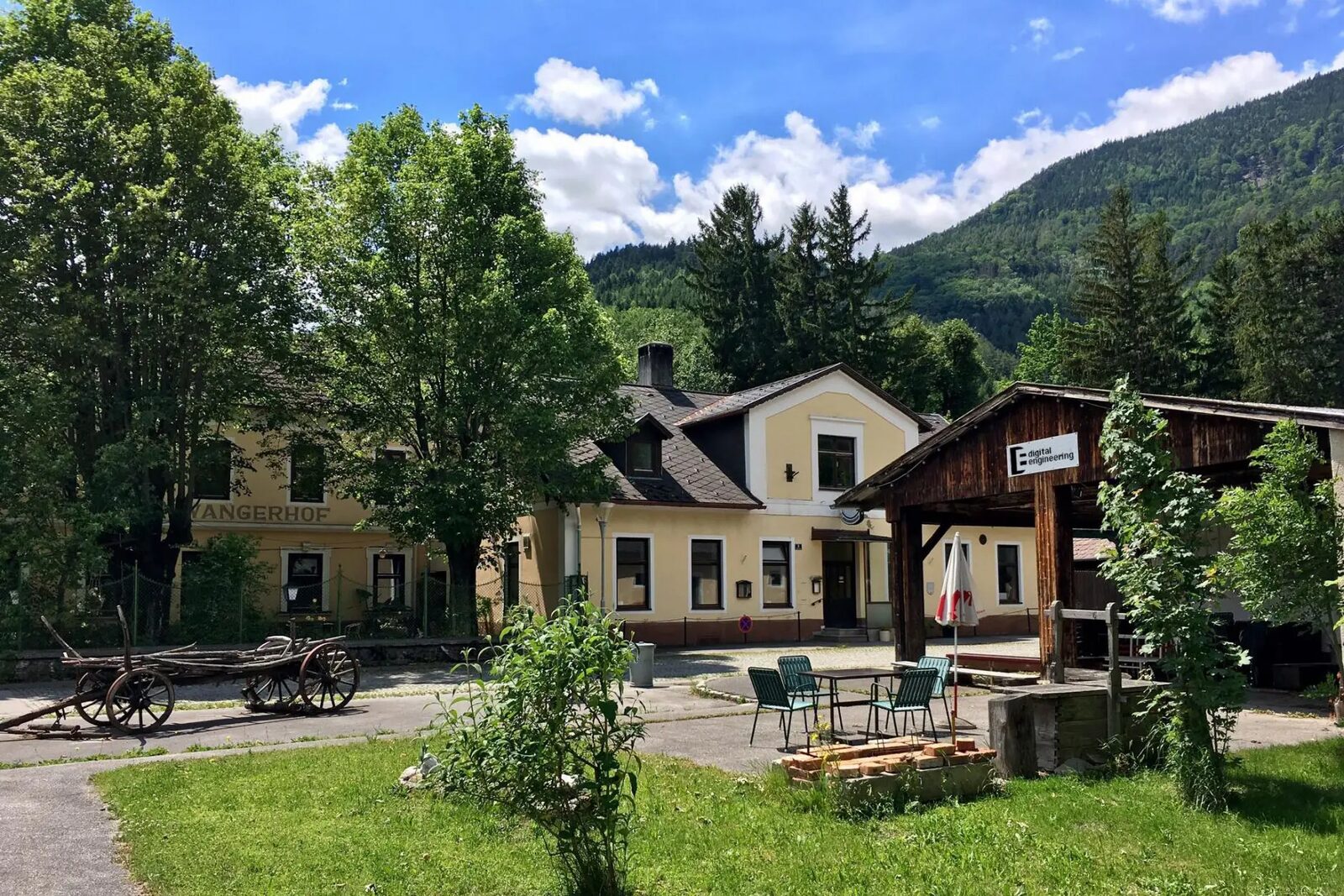
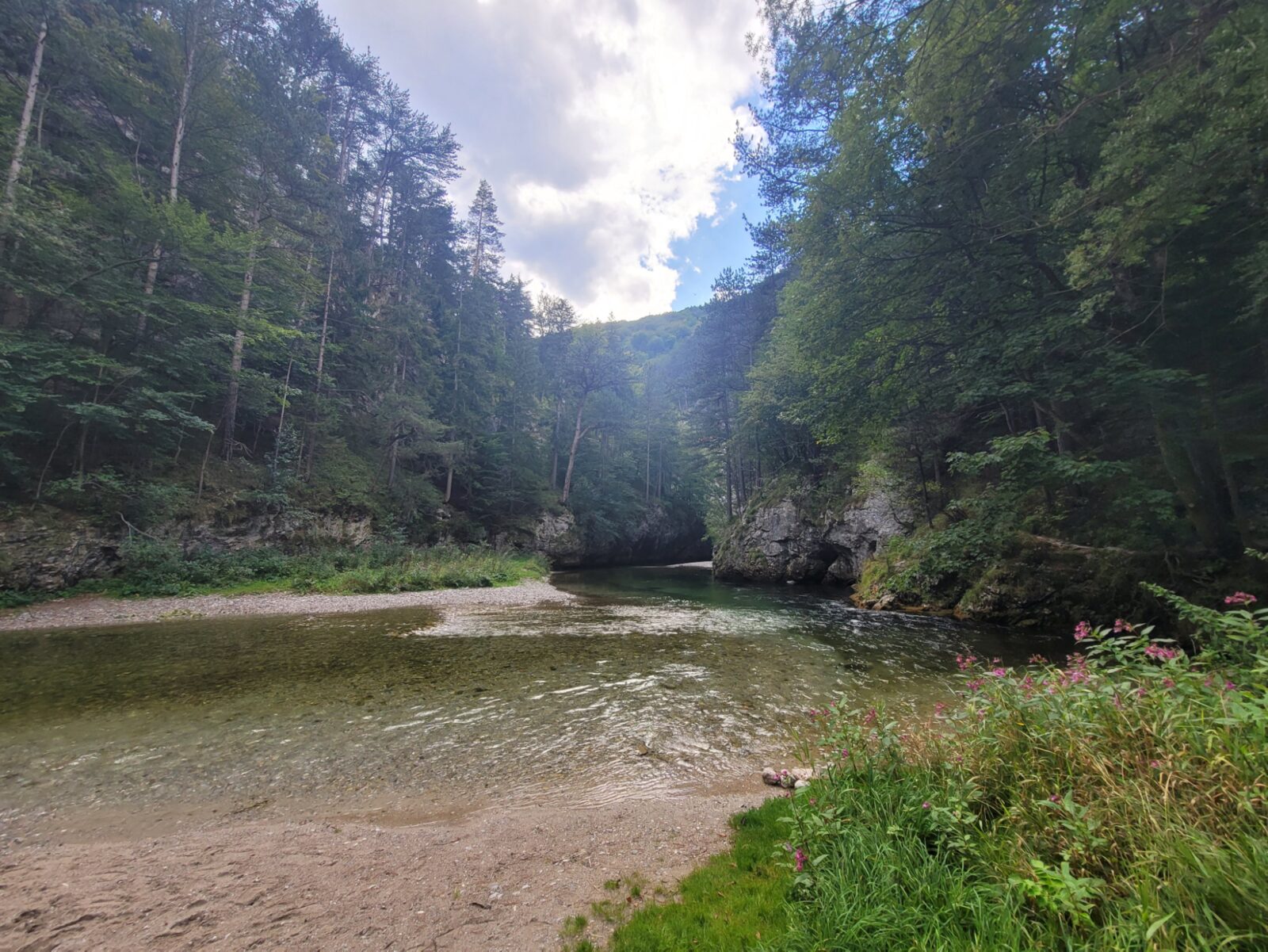
The ground it grows from is the Commons Hub, up in the Höllental valley, an hour south of Vienna: a trans-disciplinary experimentation hub for putting the new commons technologies into actual practice — e.g. open value accounting, cosmo-local production, or shared data ontologies that let scattered nodes speak the same language without any one of them owning the dictionary. This space has been home to the Crypto Commons Association for many years, and the time is right to network and expand.
We think of it, deliberately, as a hack-ademic space — builders and theorists on the same land and in the same room, where every idea has to survive contact with the ground.
The people writing the theory have to live with what it does; the people building the tools have to be able to say what they are for. That keeps both of them honest.
The vision: a living valley repopulated by the commons
Picture the Höllental with people back in it year-round:
- a cluster of communal co-living sites, owned and governed by the people who actually live in them, and right alongside them the means to make a living together —
- a fablab and makerspace turning shared designs into real objects,
- co-working and incubation space where new ventures take root,
- land worked regeneratively, and
- the cultural and care work that holds any community together.
Co-living, co-production, and co-governance on the same ground, so the people who live here can also produce here, earn here, and decide here, instead of commuting their lives out to somebody else's economy.
Why this, and not just another eco-village?
Because a single beautiful site stays a lifestyle; the point is the network.
Each valley is woven together with sister sites around the world through shared protocols, and each runs its own local nodes, so the whole has no single point of failure and no single point of capture — resilience, autonomy, and data sovereignty built into the foundation rather than bolted on after the fact.
Hubs as monasteries, federated into something like an order, leading the transformation of society and economy. That is the wager laid out in the Manifesto of the Hubs Network, and the Valley is where we test whether it holds.
The path: moves for the coming decade
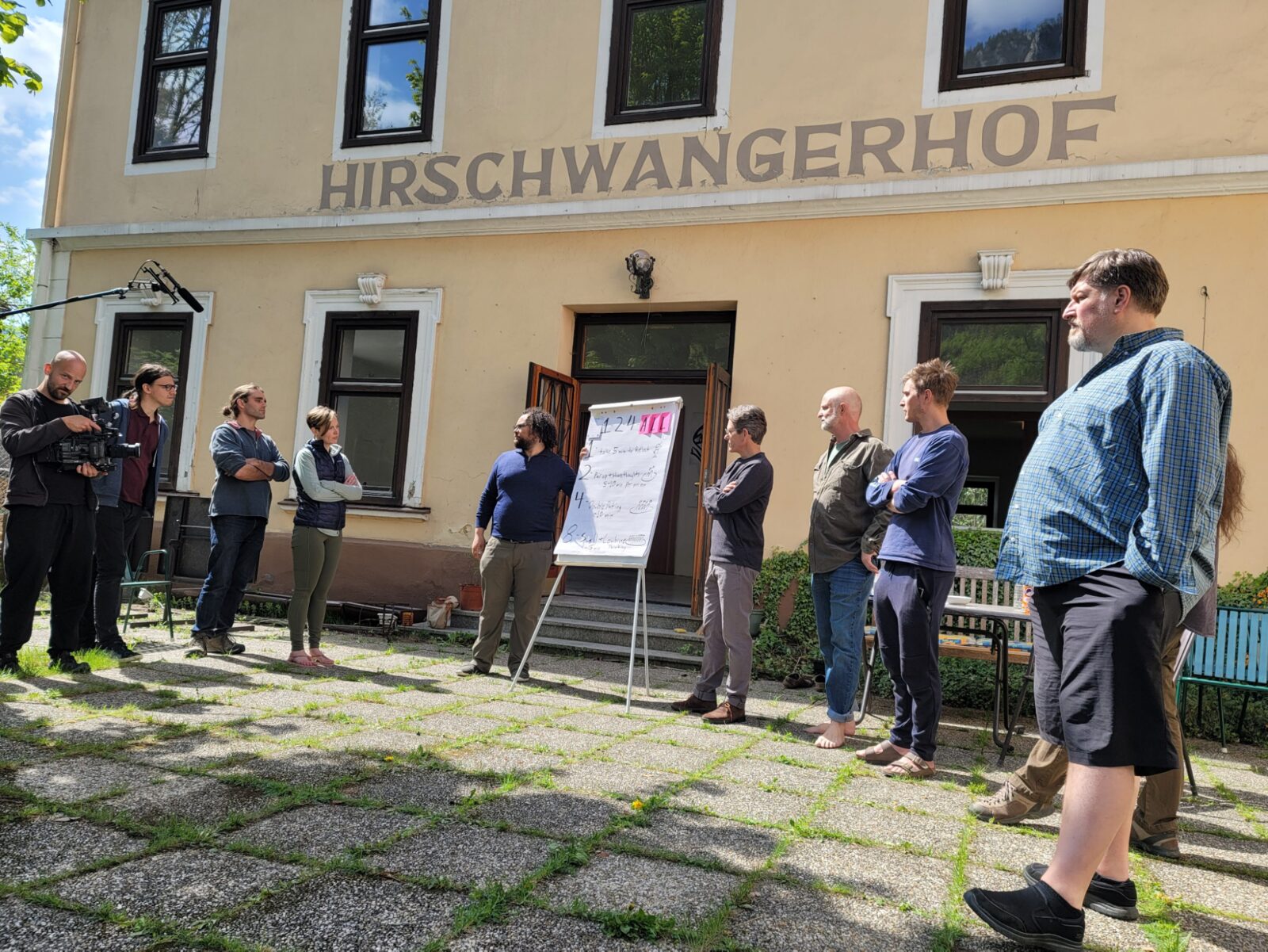
That is the horizon. Here is the path we can actually see from where we stand.
1. Establish the hub as an economic engine
Something that produces livelihoods and not just inspiration. It has to work on three fronts at once:
- as an employer that provides jobs,
- as an entrepreneurial platform (through the fablab, and for the organizers who run their events here), and
- as a broadcast network that carries what we learn out into the world — through the gatherings we host, the international networks we already belong to, and before long, perhaps, a media lab, a podcast, a publishing arm, whatever lets the signal travel.
Much of this is already happening. The work now is building general capacity: team, tools, skills, contacts, knowledge, and access to community capital.
2. Launch a first co-living opportunity
Because that is the key to growing a permanent community.
There is a threshold effect here that is easy to underestimate — having ten or fifteen commoners living in the valley year-round changes the game entirely.
Suddenly we can zoom out; projects that fall outside the hub's immediate focus become viable simply because there are hands and hours to carry them. And the relationship with the locals — the neighbors, the village, the region — grows into something far more faceted than any visiting cohort, however warm, can build in a handful of weeks.
3. Pilot real revenue streams and alternative business models for the maker space & fablab
Right now the fablab lives inside the Commons Hub and is still in its infancy. Before we scale its operations or give it a space of its own, we need to prove that it can generate revenue for itself — and that proof depends on finding the right niche products and technologies that fit local needs in the coming age of change. Already, our forward-thinking commoners are researching proof of concepts for an array of exciting projects:
- A local-first “star trek” communicator to augment the Valley of the Commons Treasure Hunt
- A waste-to-graphene proof of concept project
- A publication station, with a zine printing & book binding station
- A “farm-bot” to prototype automated planting, weeding & watering
- Novel cosmolocal data ontologies that offer entirely new affordances in P2P and P4P value transfer
We see the Commons Hub fablab & makerspace as a sandbox for experimentation in putting these new technologies to the test in real world, grounded applications. This is a space where local needs meet emergent creativity and empowering technologies — now it is on us to put our praxis into practice by mutually self-infrastructuring to meet our own demand.
4. Keep telling the story, keep building reputation
This does real, practical work on several fronts at once:
- local recognition, so the region knows who we are and takes us seriously;
- access to regional markets for the artisanal things we make; and
- some international standing on what it actually takes to build livelihoods around common-pool resources.
A reputation, here, is working capital — it opens doors, sells the work, and brings the right people to the valley.
5. Figure out an adequate governance structure
As our presence in the valley grows, we will need one that is fault-tolerant, subsidiary so that decisions are made as close to the ground as they can be, lean enough that it doesn't crush us under its own weight, and still open enough to keep experimenting, because part of why we are here is to deepen our own understanding of how horizontal communities coordinate.
That balance is genuinely hard. Getting it wrong in either direction, too rigid or too loose, is how most communities quietly die.
6. Deepen the international network
We are already building and formalizing it through the Hubs Network, and already prototyping the things that make it real — exchanges of people, collaborations on shared work, institutions we hold in common across borders. The harder task ahead is learning to act together more effectively: to grow from a federation of friendly sites into the monasteries vision — hubs coordinated tightly enough to actually carry a transformation, not just recognize one another across the distance.
7. Develop investment vehicles and funding streams
To seed regenerative local ventures, so that our impact reaches past our own core members and our own shared walls, out into the surrounding economy.
If the commons is ever going to be more than a lifestyle for the few who can afford it, it has to learn to move capital toward regeneration at a scale that matters.
Why a playground, and not another manifesto
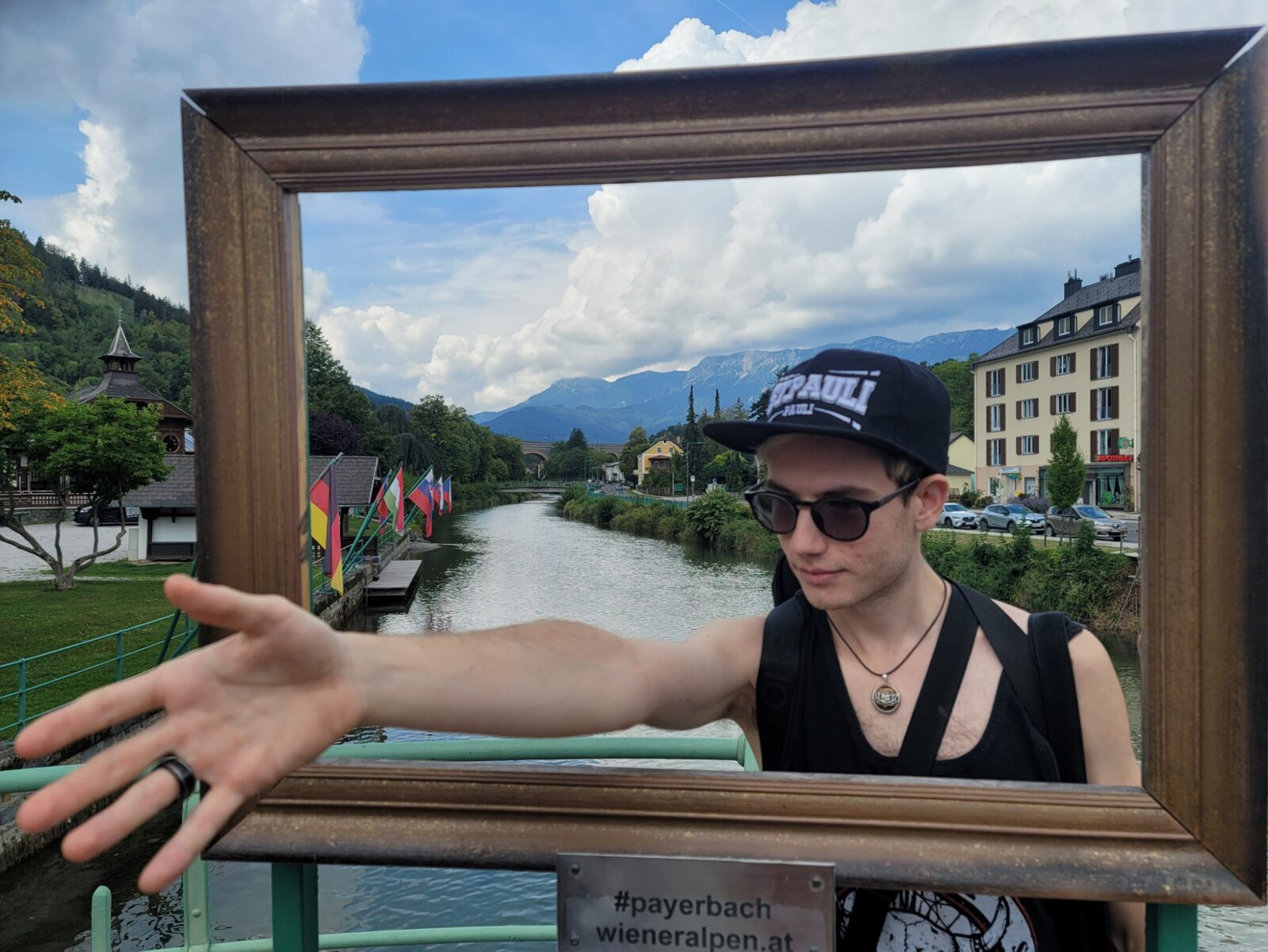
As this preliminary list demonstrates, we have a lot ahead of us — much of which requires trial and error rather than pure reasoning. That is why we need an experimental playground for the commons in the first place: not another manifesto about the world that ought to be, but a patch of ground where we try it and find out.
As Marx put it in the eleventh of his theses on Feuerbach, the philosophers have only interpreted the world, in various ways; the point is to change it.
The commons have had their interpreters, and good ones at that. What we need now is to build prototypes with enough impact on the daily lives of the people in them to permanently alter how we see the private, the communal, and the public realms.
The first step: this August
So we start where you always have to start — small, and for real.
From 24 August to 20 September 2026, the Valley of the Commons opens in the Höllental as a month-long popup village — the first real run of everything above, scaled down to something we can actually live in for four weeks.
Builders, theorists, artisans, and organizers move in together to run the fablab, work the land, keep the books in common, govern themselves, and put the new coordination tools under real load — the first honest test of whether the old patterns of commoning and the new tools of coordination genuinely compose into a life people can live.
The month is built as a sequence
- Week 1 — Return of the Commons. We open with a morning seminar by Michel Bauwens, setting the scene with the major trends in economy, technology, and (geo)politics shaping the grand transformations of our time.
- Week 2 — Cosmo-local production. We go deep on the recent advances in making things together from common-pool resources, designs, and machinery.
- Week 3 — Future living in community. The architectural and the social alike, and the hard question underneath both: what lets an intentional community keep its spirit over the long haul.
- Week 4 — Governance and funding models. We close this first step toward permanence by surfacing what has worked elsewhere and drafting a first structure for the Valley going forward.
Come take the first step with us
Rome wasn't built in a day, and the return of the commons won't simply happen of its own accord. Good things take hard work.
This is the next step towards the future of the commons — come help us take it, for a week, for a month, or join us on this life long quest.
→ Full programme and registration: ValleyoftheCommons.com
(And for the real techno-commoners, join us the week prior to the Valley of the Commons for the Crypto Commons Gathering)